Tuckpointing / Repointing services in Hoover
Tuckpointing / Repointing service Experts
Skillful tuckpointing to restore mortar lines, improve curb appeal, and protect against water intrusion.
Expert Tuckpointing And Repointing For Weathered Masonry Joints
Mortar joints are an important part of brick, block, and stone masonry, and years of moisture, temperature changes, and normal exposure can leave those joints cracked, recessed, or worn away. Our masonry services include detailed solutions for maintaining aging masonry, while professional tuckpointing and repointing focuses specifically on deteriorated mortar joints and the finished appearance of the surrounding masonry.
From isolated areas of mortar damage to broader sections of aging brickwork, effective joint repair requires more than simply adding new material over the existing surface. We evaluate the condition of the joints, the nearby masonry units, and the overall property so the repair approach is appropriate for the specific installation.
Why Proper Mortar Joint Maintenance Matters For Existing Masonry
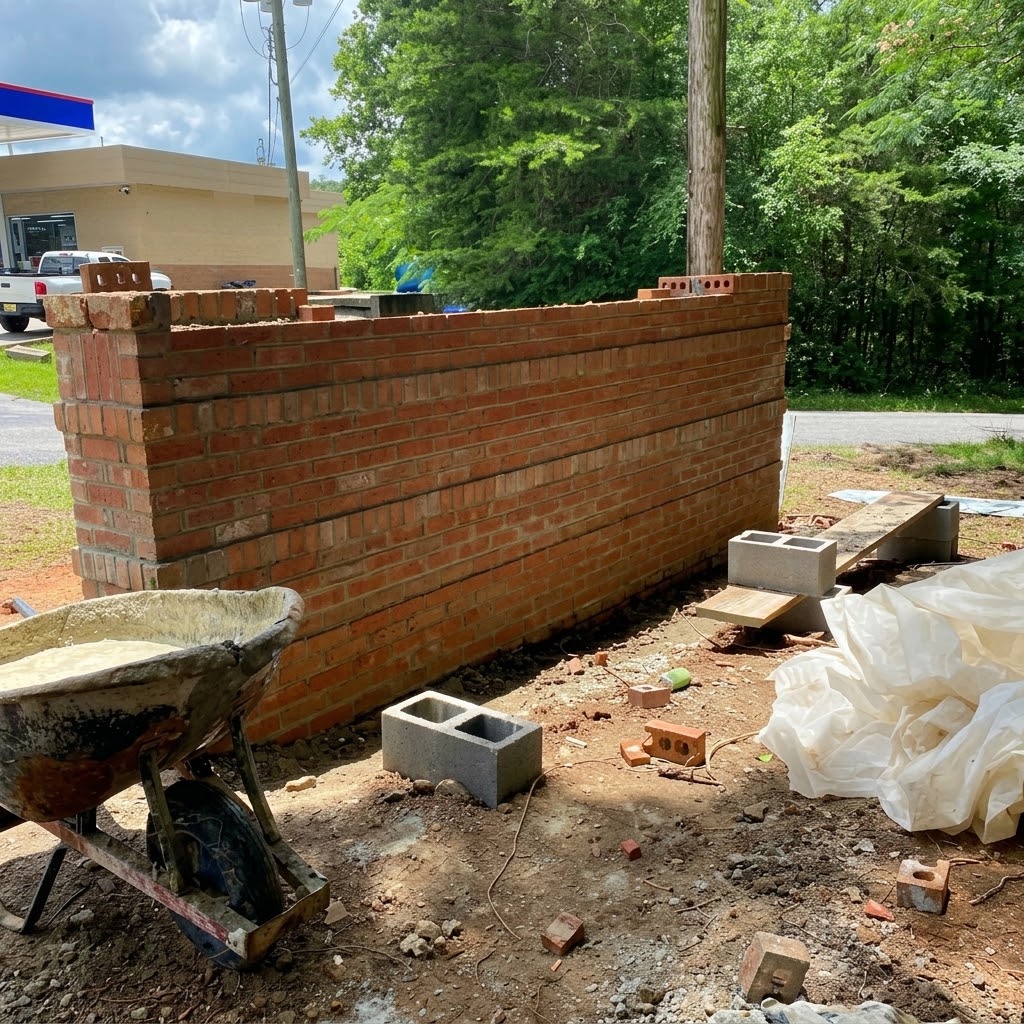
Mortar serves as the joint material between masonry units and contributes to the finished look of the entire wall. As the joints deteriorate, the changes may become noticeable through cracking, erosion, missing material, or areas where the mortar sits lower than the surrounding brick, block, or stone.
Tuckpointing and repointing allow property owners to focus on the mortar itself instead of automatically replacing otherwise serviceable masonry units. Depending on the project, properly planned joint restoration can help:
- Replace mortar that has become loose, recessed, cracked, or heavily weathered
- Improve the consistency and finished appearance of aging masonry joints
- Address isolated deterioration before it becomes more widespread across a wall
- Refresh visible brickwork around exterior walls, architectural features, and masonry openings
- Restore selected joints around chimneys and other exposed masonry structures
- Create cleaner transitions between newly repaired sections and existing masonry
The best result comes from matching the repair scope to the actual condition of the joints rather than applying the same treatment to every masonry surface on the property.
Proven Tuckpointing And Repointing Service Across The Communities We Serve
Masonry joint deterioration can look very different from one property to another. We tailor our tuckpointing and repointing work to the age of the masonry, the pattern of joint wear, the surrounding construction, and the specific area that needs attention. Our service is available across the communities below.
- Hoover : Hoover properties can feature brick exteriors, masonry accents, chimneys, and retaining structures where mortar joints gradually lose their original definition. Our approach centers on identifying the affected joints and restoring them in a way that complements the surrounding masonry.
- Birmingham : Birmingham includes a broad mix of established homes, updated properties, and older masonry construction. We can address weathered mortar around walls, facades, chimneys, and architectural masonry while considering the existing joint profile and overall appearance of the structure.
- Vestavia : In Vestavia, mortar deterioration may appear as small recessed sections, cracking along joints, or areas where previous patching has become visually noticeable. Our repointing process is planned around the specific areas of wear so the finished repair works naturally with the existing brick or block pattern.
- Homewood : Homewood properties may include masonry walls and architectural brickwork that develop joint wear over years of exposure. We focus on carefully restoring affected mortar while paying attention to joint lines, surrounding units, and the established character of the masonry.
- Trussville : Trussville homeowners may notice mortar erosion around exterior walls, brick columns, walkways, chimneys, or other masonry features. Tuckpointing provides a focused way to improve worn joints without automatically disturbing masonry units that remain in suitable condition.
- Mountain Brook : Mountain Brook homes often contain detailed brick and stone elements where joint appearance plays an important role in the overall finish. We take the surrounding masonry into account when addressing deteriorated mortar so repaired areas remain visually appropriate to the existing construction.
- Hueytown : Hueytown masonry may show signs of aging through recessed mortar, surface erosion, cracking, or areas where joint material has started to disappear. Our tuckpointing and repointing work concentrates on those conditions while preserving as much of the surrounding masonry character as practical.
- Leeds : Leeds properties can have exposed masonry that experiences ongoing moisture and seasonal weather exposure. We evaluate the joints individually and develop repair work around the locations where mortar deterioration is most visible or pronounced.
- Warrior : Warrior homes and commercial properties may contain aging brick or block where mortar joints have become soft, uneven, or visibly worn. Repointing can be used to refresh deteriorated sections while keeping the repair aligned with the surrounding wall pattern and masonry layout.
- Huntsville : Huntsville masonry can develop mortar deterioration gradually as exterior walls and other masonry features are exposed to changing weather conditions. Our repair process considers both the joint condition and the surrounding masonry before determining how the affected sections should be restored.
- Madison : Madison properties may have brickwork where individual mortar joints have eroded while the masonry units remain usable. We can focus on those weakened areas with tuckpointing or repointing that is suited to the existing wall structure and the level of deterioration present.
- Decatur : Decatur buildings and homes may contain older exterior masonry where joint lines no longer look clean or consistent. Our approach addresses the areas that need mortar restoration while considering the existing finish, masonry units, and overall pattern of the wall.
- Hartselle : Hartselle properties can experience localized mortar wear around walls, chimneys, steps, brick features, and other exposed masonry. We examine the affected joints and surrounding surfaces to develop a repair scope that fits the particular construction rather than using a blanket treatment.
- Blountsville : Blountsville homeowners may encounter mortar joints that have become cracked, recessed, or weathered after years of exposure. Tuckpointing and repointing can target those affected sections while helping the updated joints remain consistent with the existing masonry design and finish.
What Our Tuckpointing And Repointing Service Can Address
Tuckpointing and repointing are masonry repair services centered on deteriorated mortar joints. The right method depends on the condition of the existing material, the masonry units around it, the location of the repair, and the desired finished appearance. Depending on the project, our work may include:
- Localized Mortar Restoration for individual sections where joints have cracked, eroded, or lost material
- Repointing Of Aging Joints where unsuitable or deteriorated mortar needs to be removed and replaced
- Tuckpointing And Joint Refinement where clean joint definition and visual consistency are important
- Brick Masonry Joint Repair for exterior walls, facades, columns, and other brick features
- Block Masonry Joint Restoration for areas showing localized joint deterioration or weathering
- Chimney Joint Repair for masonry chimney sections affected by aging or mortar erosion
- Final Joint Finishing with attention to profile, alignment, transitions, and overall appearance
Because masonry systems vary in age and construction, the repair strategy should be developed around the actual conditions found on the property rather than relying on a single standardized treatment.
Identifying Mortar Deterioration Before It Becomes A Larger Maintenance Concern
Mortar deterioration can start subtly. A few recessed joints or small cracks may eventually become more widespread if the masonry continues to experience moisture, temperature shifts, and routine outdoor exposure. Property owners may first notice changes in the appearance of the joint lines rather than major damage to the masonry units.
Common visual clues include mortar that appears powdery, sections that have lost material, joints that sit noticeably deeper than neighboring areas, or previous repairs that no longer blend with the original masonry. Evaluating those signs can help determine whether tuckpointing, repointing, or another masonry repair service is appropriate.
Tuckpointing For Brick Walls, Chimneys, Facades, And Detailed Masonry Features
Masonry joints on exterior walls and architectural features experience ongoing exposure to rain, humidity, wind, temperature changes, and everyday environmental conditions. Chimneys can be especially exposed because they remain directly subject to the elements above the main roofline.
Repointing can focus on deteriorated joint material, while tuckpointing may also emphasize clean joint definition and finished appearance. The objective is to create repaired sections that belong visually with the existing masonry instead of leaving obvious, mismatched patches across the wall.
Careful Joint Preparation Creates A More Consistent Finished Result
Proper preparation helps determine how the masonry should be handled before replacement mortar is introduced. We consider the depth of deterioration, the condition of nearby masonry units, previous repair material, access to the affected location, and the overall appearance of the wall.
Once the affected joints are prepared, attention can be given to mortar placement, joint shape, edge definition, surface cleanup, and transitions into surrounding areas. These finishing details matter because even a technically repaired joint can look out of place when its profile or appearance does not work with the existing masonry.
A Focused Repointing Process From Initial Masonry Review To Final Detailing
The project starts with an evaluation of the masonry and visible mortar deterioration. We identify which joints need attention, examine the surrounding brick, block, or stone, and consider the location and access requirements before defining the repair scope.
The affected joint areas are then prepared according to their condition. The repair work is centered on controlled mortar removal where necessary, appropriate replacement, and careful finishing so the renewed joints relate naturally to the existing masonry.
After the joint restoration is completed, the repaired areas can be reviewed for alignment, finish, cleanup, and overall consistency. This final attention helps distinguish professional joint restoration from a simple surface patch.
Reliable Tuckpointing And Repointing Built For Lasting Masonry Maintenance
Property owners looking for dependable masonry repair services can address worn or deteriorated joints through focused tuckpointing and mortar joint restoration based on the actual condition of the masonry. When you are ready to discuss cracked joints, missing mortar, or weathered brickwork, you can contact our masonry repair team to review the property and discuss the appropriate next step.
Our approach emphasizes careful evaluation, appropriate joint preparation, controlled repair work, clean finishing, and attention to the relationship between newly restored joints and the surrounding masonry. Every project is approached according to the specific construction and level of deterioration involved.
The Long-Term Value Of Addressing Aging Mortar Joints
Deteriorated mortar can change the overall appearance of an otherwise attractive brick, block, or stone surface. Addressing worn joints provides an opportunity to refresh the visible masonry while concentrating repair work where it is actually needed.
Tuckpointing and repointing can also complement broader property maintenance. A homeowner may restore selected joints around a chimney, refresh a portion of an exterior brick facade, or address mortar wear as part of a larger masonry improvement project.
The most appropriate scope depends on the age and construction of the masonry, the pattern of deterioration, the location of the affected joints, and the condition of the surrounding materials.
How We Handle Tuckpointing And Repointing From Start To Finish
We begin by reviewing the affected masonry and identifying visible joint deterioration, previous repairs, access conditions, and areas where the mortar no longer performs or appears as intended. This initial review establishes which sections require focused attention.
Preparation is then based on the condition of the existing joints. Throughout the repair, the goal is to maintain clean joint lines, protect nearby masonry, control the work area, and create transitions that fit the established pattern of the wall.
Once the mortar restoration is finished, the repaired areas are checked for joint consistency, detailing, surface cleanup, and overall presentation. This process keeps the work centered on the masonry's existing character and the specific needs of the property.
Signs Your Masonry May Need Tuckpointing Or Repointing
Mortar problems can remain relatively small for a period of time before becoming more noticeable. Consider having your masonry evaluated when you see:
- Cracked mortar joints running between brick, block, or stone units
- Joints that have become noticeably recessed compared with surrounding areas
- Powdery, crumbly, loose, or visibly eroded mortar
- Sections where joint material is missing or has worn away
- Old mortar repairs that no longer match the surrounding masonry
- Localized joint deterioration around chimneys, corners, openings, or wall edges
- Exterior masonry with an uneven or noticeably weathered joint appearance
These signs do not automatically indicate the same repair is needed everywhere. A closer inspection of the masonry can help determine whether localized repointing, broader joint restoration, or another masonry service is the better solution.
Why Property Owners Choose Our Tuckpointing And Repointing Services
- Focused masonry experience centered on mortar joints and surrounding masonry conditions
- Careful evaluation of cracked, recessed, eroded, or missing joint material
- Repair planning based on the actual location and extent of deterioration
- Attention to joint profile, alignment, edge definition, and final appearance
- Work adapted for brick walls, block construction, chimneys, facades, and other masonry features
- Clear communication about the condition of the affected areas and recommended scope
- Professional work practices designed to protect adjacent finished surfaces and property areas
- A detailed approach that avoids treating every masonry repair as an identical project
What Can Affect The Cost Of Tuckpointing Or Repointing?
The price of a masonry joint restoration project can vary depending on how much joint material is deteriorated, where the work is located, how accessible the affected areas are, and how much preparation and finishing are required. A small localized repair can involve very different work from extensive repointing across a large facade.
- Total joint area — larger sections of deteriorated mortar generally require more preparation and repair work
- Condition of the existing mortar — loose, deeply eroded, or heavily worn joints may require additional preparation
- Masonry type — brick, block, and stone assemblies can have different joint dimensions and repair considerations
- Location of the repair — chimneys, elevated walls, and difficult-to-reach sections may require additional planning
- Site accessibility — tight or restricted work areas can influence setup and job organization
- Additional masonry repairs — related brick, stone, chimney, wall, or hardscape work can expand the overall project
Understanding these factors helps property owners evaluate the recommended work based on the real condition of the masonry instead of relying on a one-size-fits-all repair approach.
Frequently Asked Questions About Tuckpointing And Repointing
Tuckpointing is a masonry joint technique that focuses on improving the appearance and definition of mortar joints. Depending on the existing masonry and project goals, it can involve detailed joint restoration and finishing designed to create cleaner, more consistent lines.
Repointing involves addressing deteriorated mortar joints by removing unsuitable material where necessary and replacing it with new mortar appropriate for the masonry repair. The work focuses on the joints rather than replacing the entire masonry wall.
Common signs include cracked joints, recessed mortar, powdery or crumbly material, missing sections, visible erosion, and older repairs that no longer blend with surrounding masonry. The exact condition should be evaluated in relation to the entire wall.
Yes. Chimney masonry can develop deteriorated mortar joints from continued exposure to weather. Tuckpointing or repointing may be appropriate depending on the condition of the joints, the surrounding masonry, and the location of the affected areas.
Not necessarily. Some properties have localized mortar deterioration that can be addressed in selected sections. The appropriate scope depends on the pattern and severity of deterioration and the condition of nearby masonry.
Project duration varies according to the size of the affected area, the depth and condition of the mortar, accessibility, preparation requirements, and the amount of joint finishing involved. A small repair can be substantially different from a large-scale masonry restoration.
Having visible joint deterioration evaluated can help property owners understand whether the masonry needs localized attention or a broader repair scope. The proper solution depends on the specific wall, joint condition, surrounding materials, and maintenance goals.
Masonry Services We Offer Aside From Tuckpointing Or Repointing
SEE WHAT OUR CUSTOMERS SAY ABOUT US
REVIEWS
REVIEW US ON GOOGLE
our process
Our process is simple and only contains a few steps
proudly serving these areas
Hoover
Birmingham
Vestavia
Homewood
Trussville
Mountain Brook
Hueytown
Leeds
Warrior
Huntsville
Madison
Decatur
Hartselle
Blountsville
READY TO take the next step?
get a free quote TODAY!


business
our services
service areas
operating HOURS
Monday: 7:00 AM - 5:00 PM
Tuesday: 7:00 AM - 5:00 PM
Wednesday: 7:00 AM - 5:00 PM
Thursday: 7:00 AM - 5:00 PM
Friday: 7:00 AM - 5:00 PM
Saturday: 7:00 AM - 5:00 PM
Sunday: Closed

© 2026 Mark Wayne Masonry