
Chimney Repair services in Hoover
Chimney Repair Service EXPERTS
Chimney repair services that ensure safety, functionality, and long-lasting performance.
Professional Retaining Wall Builds And Repair For Stronger, Better-Supported Outdoor Spaces
Retaining walls play an important role in shaping outdoor spaces, managing changes in elevation, and defining landscaped areas. Our masonry services include specialized solutions for damaged, shifted, leaning, or newly planned retaining walls. When a wall has visible movement or deterioration, retaining wall repair and construction can be tailored to the existing property, surrounding grade, drainage conditions, materials, and intended use.
Retaining wall concerns can develop because of settlement, water movement, soil pressure, drainage problems, weather exposure, aging materials, or changes in the surrounding landscape. If you notice leaning sections, cracked blocks, separated joints, displaced masonry, bulging areas, or erosion around the wall, our team can evaluate the affected structure and help determine a practical repair or rebuilding approach.
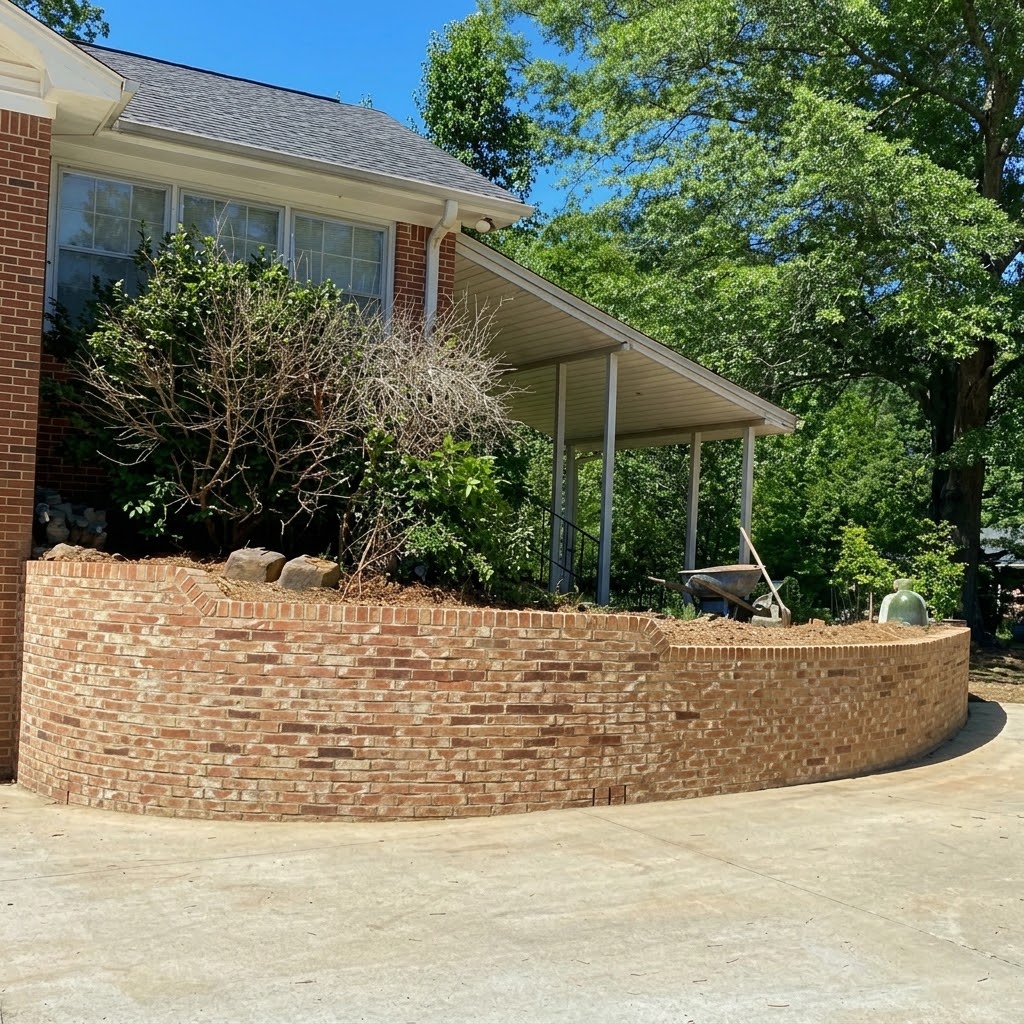
Why Proper Retaining Wall Construction And Repair Matters For Your Property
Retaining walls interact with surrounding soil, drainage, grading, landscape features, and hardscape areas. Over time, water, ground movement, changing weather, soil pressure, and aging materials can affect the alignment and condition of the wall.
A properly planned Retaining Wall Builds And Repair project focuses on the specific conditions affecting the site. Depending on the property, professional retaining wall work can help:
- Repair cracked, shifted, leaning, or deteriorated retaining wall sections
- Replace damaged or displaced masonry units and related components
- Rebuild localized portions of walls that no longer maintain their intended alignment
- Construct new retaining walls for suitable landscape and grade-transition projects
- Address visible drainage and water-management concerns around affected wall areas
- Improve the overall appearance and continuity between the wall and surrounding landscape
The objective is to restore or construct the retaining wall according to the needs of the property while keeping the surrounding landscape, grade, materials, and intended function in consideration.
Proven Retaining Wall Builds And Repair Across The Communities We Serve
Every retaining wall has different site conditions. Terrain, soil movement, drainage, wall materials, surrounding landscaping, access, and the purpose of the wall can all affect how a project should be approached. Our retaining wall service is customized to the specific property rather than using one standard method for every location.
- Hoover : Hoover properties often use retaining walls around sloped yards, landscape beds, patios, walkways, and outdoor living areas. We examine wall movement, grade changes, drainage, and surrounding masonry before determining whether repair or rebuilding is appropriate.
- Birmingham : Birmingham homes and businesses can have retaining walls integrated into landscaped slopes, driveways, gardens, and exterior pathways. Our approach considers the wall's construction, visible deterioration, access, and the conditions around the structure before work begins.
- Vestavia : Vestavia properties may have retaining structures supporting landscaped elevations and outdoor spaces. Where walls develop cracking, leaning, shifted sections, or drainage-related wear, we focus on the affected area while considering the surrounding landscape and wall alignment.
- Homewood : Homewood properties can incorporate retaining walls into yards, garden areas, walkways, and decorative hardscapes. We evaluate the wall's material, placement, condition, surrounding grade, and adjacent features when planning a repair or new installation.
- Trussville : Trussville retaining walls can be affected by changing soil conditions, water movement, weather exposure, and natural settlement. Our team reviews visible movement and the surrounding site before choosing a focused repair or rebuilding strategy.
- Mountain Brook : Mountain Brook homes may feature carefully designed retaining walls that work alongside landscaping, stonework, patios, and pathways. We pay attention to wall alignment, transitions, materials, finished appearance, and the relationship with nearby landscape features.
- Hueytown : Hueytown properties may experience retaining wall deterioration through moisture, settlement, aging materials, or changing ground conditions. We assess the damaged sections and surrounding site before determining the appropriate repair scope.
- Leeds : Leeds properties can use retaining walls to manage changes in yard elevation and organize landscaped areas. Cracked joints, displaced units, or visible movement are evaluated alongside drainage and surrounding ground conditions.
- Warrior : Warrior landscapes may include retaining walls around slopes, garden spaces, paths, or property transitions. We focus on the wall's visible condition while also considering the terrain, drainage, surrounding masonry, and intended purpose.
- Huntsville : Huntsville retaining walls remain exposed to seasonal weather and changing moisture conditions. When masonry shifts, cracks, or begins to deteriorate, we examine the affected structure and nearby ground conditions before determining the repair direction.
- Madison : Madison properties may have established retaining walls supporting planting areas, paths, patios, and landscaped slopes. We tailor repair work to the existing wall construction, grade, drainage conditions, and extent of visible damage.
- Decatur : Decatur homes and businesses can have retaining structures affected by long-term weather exposure, soil movement, or water flow. We evaluate the wall and surrounding landscape to develop a repair or rebuilding scope suited to the property.
- Hartselle : Hartselle properties may need retaining wall repair for localized cracking, displaced blocks, settlement, or deteriorated sections. We consider the wall's construction and the surrounding grade before determining the most practical approach.
- Blountsville : Blountsville properties can develop retaining wall movement or deterioration after prolonged exposure to weather, moisture, and changing ground conditions. We focus on the specific wall sections involved while keeping the larger landscape and existing masonry in consideration.
Retaining Wall Solutions For New Builds, Damaged Sections, And Masonry Restoration
Retaining wall work can range from repairing a small damaged section to rebuilding portions of an existing wall or constructing a new structure for a planned outdoor space. The appropriate scope depends on the wall type, height, materials, grade, drainage, access, and intended purpose. Work may include:
- Retaining Wall Repair for cracked, shifted, leaning, or deteriorated existing wall sections
- Partial Wall Rebuilding for localized areas that require removal and reconstruction
- New Retaining Wall Construction for suitable landscape and grade-transition projects
- Block And Masonry Unit Replacement for cracked, broken, displaced, or heavily damaged pieces
- Wall Joint Restoration for deteriorated or weakened mortar joints between masonry units
- Wall Cap And Edge Repair for damaged finishing components and upper wall sections
- Landscape And Hardscape Transition Work to help repaired or new retaining walls connect naturally with nearby outdoor features
Retaining walls are influenced by their surroundings as much as by the masonry itself. A detailed assessment helps determine whether focused repair, partial reconstruction, or a new wall build is the most suitable direction.
Understanding What Can Cause A Retaining Wall To Crack, Lean, Shift, Or Deteriorate
Retaining wall problems can develop from several conditions, including soil pressure, settlement, changing drainage, water accumulation, erosion, weather exposure, aging materials, and movement in the surrounding landscape. The visible symptom does not always reveal the full reason for the problem.
Cracks, bulging sections, leaning walls, displaced blocks, separated joints, erosion, and water collecting around the structure can all justify closer evaluation. Looking at the retaining wall together with the surrounding grade, drainage, soil, hardscape, and nearby structures provides better context for determining the appropriate repair approach.
Retaining Walls For Sloped Yards, Garden Areas, Walkways, Patios, And Landscape Design
Retaining walls can help organize changes in elevation around homes and commercial properties. They may be used around planting areas, sloped yards, patios, walkways, driveways, garden spaces, and other outdoor features where a defined change in grade is needed.
Because each application has different site conditions, retaining wall construction and repair should account for surrounding landscaping, grade transitions, drainage, materials, access, and the visual relationship between the wall and nearby hardscape.
Thorough Site Preparation Helps Create A More Reliable Retaining Wall Project
Preparation is an important part of retaining wall construction and repair. Before damaged masonry is repaired, sections are rebuilt, or a new wall is installed, the affected area may need to be evaluated for grade, drainage, soil conditions, existing materials, access, adjacent features, and visible signs of movement.
Once the area is prepared, attention can be given to wall placement, alignment, height, transitions, surrounding grades, and the relationship between the retaining wall and nearby landscape or hardscape. These details help create a finished installation that fits the existing property.
A Detailed Retaining Wall Process From Site Assessment To Final Completion
The process begins with a review of the existing retaining wall or proposed wall location and the surrounding site. We consider visible damage, wall alignment, grade changes, drainage conditions, access, nearby landscaping, and the intended use of the area before defining the project direction.
During the work, attention is given to preparing the affected area, repairing or rebuilding damaged sections when appropriate, constructing new wall sections where planned, and maintaining clean transitions with surrounding grades and masonry. The approach is adapted to the actual property rather than relying on a single method for every wall.
After the main work is completed, the retaining wall and surrounding area can be reviewed for alignment, finished appearance, transitions, cleanup, and overall continuity. Whether the project involves a localized repair, partial rebuild, or new construction, the work is tailored to the site.
Reliable Retaining Wall Builds And Repair Built To Support Your Property For Years
Property owners looking for dependable masonry services can address leaning, cracked, shifted, or deteriorated retaining walls through a focused retaining wall repair and construction service planned around the site's grade, drainage, existing masonry, and intended use. When you are ready to discuss wall movement, damaged sections, drainage concerns, or a new retaining wall project, contact our retaining wall professionals to review the property and determine a practical scope of work.
We understand that retaining wall work involves more than correcting a visible masonry defect. Our approach considers the surrounding grade, drainage, soil conditions, wall alignment, materials, transitions, access, appearance, and how the finished wall needs to function within the property.
The Long-Term Value Of Maintaining And Improving Retaining Wall Structures
Visible movement or deterioration can become increasingly noticeable as moisture, soil pressure, weather, and normal aging continue to affect an outdoor wall. Addressing damaged areas gives property owners an opportunity to improve the appearance and condition of an important landscape feature.
Retaining wall repair can also fit into larger exterior improvement projects. A homeowner may rebuild a damaged wall while updating landscaping, restore a retaining section before installing a new walkway, or construct a new wall to create a more defined outdoor space on a sloped portion of the property.
The right solution depends on the existing wall condition, surrounding grade, drainage, materials, extent of damage, access, and the intended long-term use of the property.
How Our Masonry Team Handles Retaining Wall Projects From Assessment Through Completion
We begin by reviewing the affected retaining wall or proposed build area and the surrounding landscape. This helps identify visible movement, cracks, alignment changes, drainage concerns, site access, and other conditions that may influence the project.
Preparation then follows the actual requirements of the site. During repair or construction, we focus on proper wall placement, alignment, surrounding area protection, grade transitions, drainage considerations, masonry connections, and a finished appearance that complements the property.
After the primary work is complete, the retaining wall and surrounding area can be reviewed for consistency, appearance, transitions, cleanup, and final detailing. Whether the project involves a small repair or a larger retaining wall build, the work is adjusted to the specific property.
Signs Your Retaining Wall May Need Professional Repair Or Rebuilding
Retaining wall deterioration does not always begin with obvious movement. Smaller changes can indicate that the wall and surrounding landscape deserve closer attention. Consider Retaining Wall Builds And Repair when you notice:
- Wall sections that appear to lean, bulge, shift, or move out of alignment
- Cracks running through blocks, masonry units, or mortar joints
- Separated joints, displaced pieces, or damaged wall caps
- Soil pushing visibly against or through portions of the wall
- Water collecting behind or around the retaining wall
- Visible erosion, settlement, or changes in the grade beside the wall
- Previous repairs that no longer blend properly with the rest of the wall
When these conditions appear, a professional evaluation can help determine whether localized repair, partial rebuilding, a new retaining wall, or another masonry service is the better fit.
Why Property Owners Choose Our Retaining Wall Build And Repair Team
- Experienced masonry professionals focused on retaining walls and surrounding site conditions
- Careful evaluation of cracked, leaning, shifted, deteriorated, or damaged wall sections
- Project planning based on the actual wall condition, grade, access, and intended use of the space
- Attention to alignment, transitions, materials, drainage considerations, appearance, and final cleanup
- Work scopes tailored to repairs, partial rebuilds, and new retaining wall construction
- Clear communication throughout the retaining wall project
- Professional work practices designed to respect adjacent landscaping, hardscape, structures, and finished surfaces
- A practical approach that considers the wall and surrounding site rather than treating every project identically
What Can Influence The Cost Of Retaining Wall Builds And Repair?
The cost of retaining wall work can vary depending on wall size, height, materials, access, site conditions, drainage requirements, the extent of damage, and whether the project involves repair, rebuilding, or new construction. Every property can require a different level of preparation and masonry work.
- Wall Size And Height — larger or taller walls can require more materials and installation work
- Extent Of Damage — significant cracking, leaning, displacement, or deterioration can increase the repair scope
- Site Grade And Soil Conditions — slopes, elevation changes, and surrounding ground conditions can affect preparation
- Drainage Considerations — water movement and drainage-related work can influence the overall project
- Materials And Finishes — block, stone, caps, masonry units, and finishing details can affect installation requirements
- Access And Related Outdoor Work — difficult access, landscaping, walkways, concrete, and connected masonry work can expand the project scope
Understanding these factors helps property owners evaluate the recommended work based on the actual condition of the wall, the surrounding property, and the intended result.
Frequently Asked Questions About Retaining Wall Builds And Repair
Retaining walls can be affected by soil pressure, settlement, water movement, drainage conditions, erosion, weather exposure, aging materials, and changes in the surrounding landscape. The exact cause depends on the wall construction and site conditions.
Some retaining wall problems can be addressed through localized repair or partial rebuilding when the surrounding wall and site conditions remain suitable. A professional evaluation helps determine the appropriate scope.
A wall that visibly leans, bulges, cracks, shifts, or develops drainage-related concerns should be evaluated when those conditions become noticeable. The wall, surrounding soil, grade, and drainage can all influence the repair direction.
Yes. Retaining wall services can include new construction for suitable landscape and grade-transition projects. The appropriate construction approach depends on the site, wall purpose, materials, access, drainage, and surrounding conditions.
Water movement and drainage conditions can affect soil and the area surrounding a retaining wall. When visible water accumulation or drainage concerns are present, those conditions should be considered as part of the overall wall assessment.
Project time varies according to wall size, height, materials, access, site preparation, drainage considerations, damage level, and overall scope. A small localized repair can require much less work than a larger rebuild or new construction project.
Having visible movement or deterioration evaluated can help property owners understand whether the issue is isolated or connected to broader site conditions. The appropriate response depends on the wall, surrounding grade, drainage, materials, and construction.
Masonry Services We Offer Aside From Retaining Wall Builds And Repair
SEE WHAT OUR CUSTOMERS SAY ABOUT US
REVIEWS
REVIEW US ON GOOGLE
our process
Our process is simple and only contains a few steps
proudly serving these areas
Hoover
Birmingham
Vestavia
Homewood
Trussville
Mountain Brook
Hueytown
Leeds
Warrior
Huntsville
Madison
Decatur
Hartselle
Blountsville
READY TO take the next step?
get a free quote TODAY!


business
our services
service areas
operating HOURS
Monday: 7:00 AM - 5:00 PM
Tuesday: 7:00 AM - 5:00 PM
Wednesday: 7:00 AM - 5:00 PM
Thursday: 7:00 AM - 5:00 PM
Friday: 7:00 AM - 5:00 PM
Saturday: 7:00 AM - 5:00 PM
Sunday: Closed

© 2026 Mark Wayne Masonry